When the temperature drops below zero, things start to get serious in the forest. In summer, you can easily go camping overnight with little or no equipment at all. In winter, however, even small gear choices can determine whether you come home sick or not. It’s also about your daily outdoor habits, and drinking hot tea and other infusions is one of the best ones. But why?
More tea = more comfort
Hot beverages make you feel much warmer – that’s a fact. Additionally, tea leaves, coffee grains and cocoa beans contain different stimulants, such as caffeine and theobromine, that make you feel more energetic. The taste is also an important factor – it can significantly boost morale. Some infusions also have medicinal properties that can help prevent illness or relieve existing symptoms. In general, a good hot drink will leave you warm, energized, happier and healthier
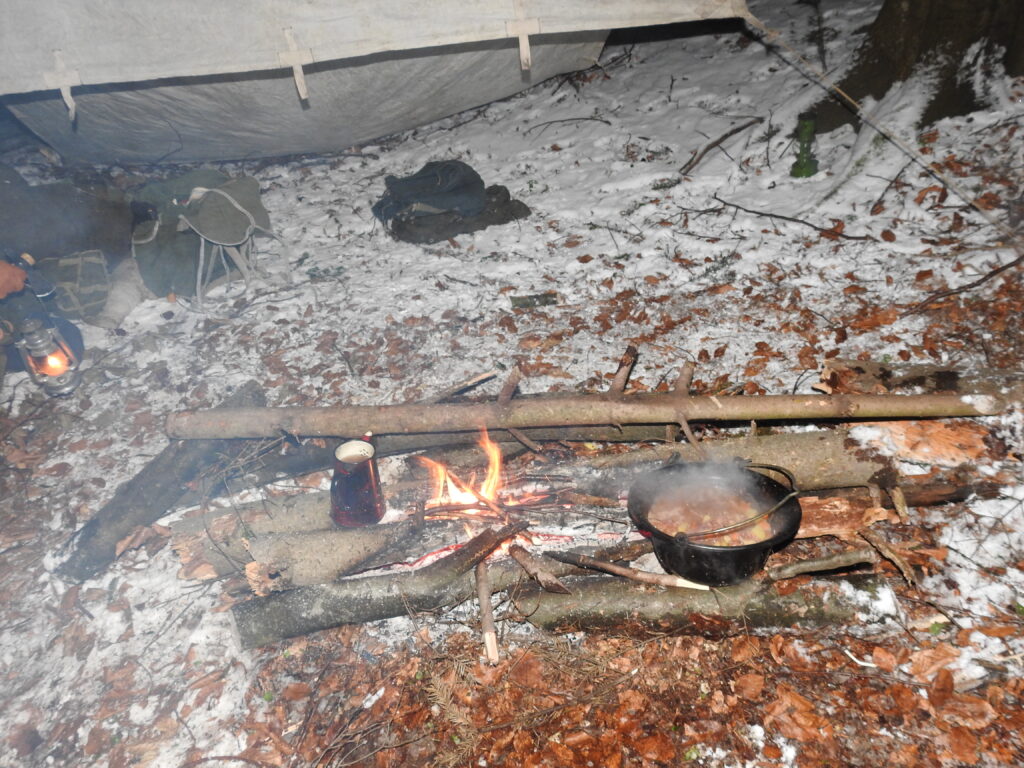
The power of stimulants
The most popular stimulant beverages are coffee, tea, cocoa, and yerba mate. They contain caffeine or other compounds that work in a similar way. Those compounds, if not overused, can keep you from feeling tired and help you regain energy during hard work. That also means they can prevent you from falling asleep, so it’s best to drink them in the morning rather than at bedtime. It takes about 7 hours for the body to get rid of ingested caffeine. Take it into account when boiling water for another drink later in the day. When making tea, the shorter you brew it, the more power it will give you. Brewing for about 3–5 minutes is enough to maximise the stimulant effect. If you keep the leaves in the water longer, they’ll start releasing tannins into the brew. Tannins diminish your body’s ability to receive caffeine, thus making the beverage less stimulating and more bitter (and better for drinking near bedtime).
It’s great to have a stimulant beverage option at hand, but you must use it wisely – even tea can be addictive! If you drink stimulants too often, they’ll stop working for you.
Achieving great flavour
Flavour is a personal preference. I love bitter and sour beverages, and many would deem my favourites undrinkable. It’s best to read about the proper preparation methods for the infusions you are going to prepare. Do it by the book, try it, and then decide if you want to change it in any way.
When brewing tea, a longer steeping time will make the tea stronger and more bitter. You can also experiment with the type of tea you use (e.g. green tea, black tea, pu-erh, etc.). It’s best to use leaf tea instead of teabags – we don’t need any more microplastics in our diet.
When brewing coffee, you can select from two different coffee species (i.e. arabica or robusta) or a mix of them, and different countries of origin. The type of roast is also a major factor – the darker the roast, the stronger and more bitter the coffee will be. I don’t really recommend using instant coffee – it’s highly processed, and gives you no control over taste.
Other beverages made with herbs and different roasted seeds will require different treatment to achieve the desired taste. You can always add some sweetness by using honey, sugar, syrup or stevia. Some milk can be nice when you drink coffee or cocoa (or tea if you’re British). My latest discovery was adding condensed milk to black tea – it turned out to be great!
Healing herbal infusions
There are countless plant species with medicinal properties, and I can’t name them all. Mint infusions are great for your gut and digestion. Chamomile is generally great to support your body when battling infections. Stinging nettles improve blood purification. Pine, fir and spruce needles contain vitamin C and antioxidants. Adler “cones” and blueberries can stop diarrhoea. Lime tree flowers or mallow will help soothe a cough. Hops help to achieve good sleep. Willow inner bark will act like a natural painkiller. There is a lot more to say, but that’s material for another article or even a series of articles.
There are also medicinal mushrooms that can be made into medicinal infusions. I don’t know much about them yet, but I know about two for sure. Chaga infusion boosts your general immunity. Birch polypore can be made into an anti-bacterial infusion, but treat it as an antiseptic, not a drink. If you know more about medicinal mushroom “tea”, I’ll be glad to learn something new from you in the comments.
My personal favourite
Spruce tea is my favourite outdoor beverage so far. Acidic and bitter, tasting like the tree resin – it’s the staple taste of a mountainous forest. There are a few ways people prepare the infusion, mostly depending on nutritional needs and taste preferences.
Firstly, a few words about the spruce. This tree loves humidity – it won’t grow in dry forests and hot environments, but it will excel in the mountains and foggy, damp forests. It’s best known for the wood – full of knots and very durable, especially for a coniferous tree. It’s also a great fire starter due to the high terpene content in its resin. Spruce wood burns intensely, often producing some black smoke in the process. However, it’s one of the worst choices for campfire wood – spruce logs produce lots of sparks and can even shoot embers out of the fire, often causing burns and damaging equipment. Needles are not the only thing you can forage from this tree. Fresh, light-green young offshoots can be eaten whole. Spruce cones, when young, tender and red, can be made into a marmalade that strongly resembles rose flower marmalade. Spruce needles, young or old, contain a significant amount of vitamin C, which makes this tree very important to any wild camper’s diet when spending longer periods of time in the bush .
And vitamin C is the key reason why there are different methods for making a spruce infusion. This vitamin is vital for our immune system, and we want to have it in our drink. But there’s a catch – it gets destroyed when treated with high temperatures. The method said to preserve the most vitamin C in the drink is to add the needles to almost-boiling water and let them steep off the heat for a few minutes. The temperature is lower, so it shouldn’t destroy all the nutrients.
The other method is to put the needles into boiling water and boil them for a few minutes. The aroma of the infusion is much stronger, and some people believe the short boiling time prevents vitamin C destruction.
The last one is to put the needles into cold water, bring it to a boil, and boil for as long as you like. The sooner you take it off the fire, the more vitamins it will have, but if you let it sit on the coals longer, it will be a lot stronger and tastier.
The third one is my personal favourite – sometimes I have plenty of berries around, and don’t really need to worry about vitamins. Then I can let the spruce boil longer, and make myself a mug of delicious, resinous drink. It’s best with a teaspoon of honey! Here’s a short recipe:
Spruce tea (350 ml)
- Water 350 ml (use 400ml when cooking on a campfire, trust me – some will evaporate)
- A fistful of spruce twigs with green needles
- 1 tsp honey
Place your spruce twigs in a cooking vessel, and pour in enough water to cover them. Put a lid on the vessel, and let the water boil. Boil for 5 minutes and check the contents of your vessel – if the liquid has taken on some colour from the needles and is starting to get cloudy, your tea is ready. The needles should lose their green colour by this time. Pour the beverage into your mug and sweeten with honey. Make sure you don’t have any needles in your drinking mug – they are tricky to take out when they stab you somewhere in your throat.
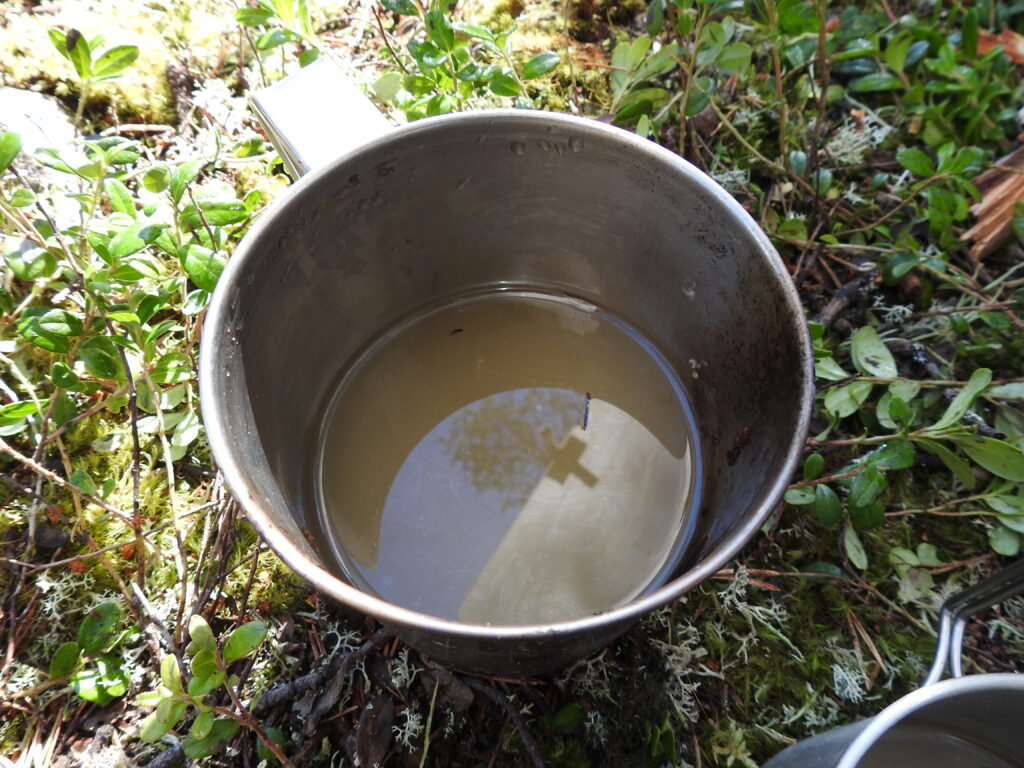
Unfortunately, I couldn’t find any real scientific studies or publications about the behaviour of vitamin C in spruce needles when used in infusions, but if any of you know about such research or have tested it yourselves, I’ll be glad to read about this in the comments.
When and how to drink hot beverages when camping?
They should be with you whenever it’s cold. In summer, that usually means mornings or late evenings, maybe nights if you stay up late. In other seasons, if it’s cold all the time, you should probably consider having an option to make a warm drink fast, so that it’s an accessible option for the whole day.
During my last two winter camping trips, I made sure the teapot was on fire all the time. This way we had access to a hot drink all day long, which really made us feel better. It’s also important to note that you shouldn’t throw away your tea right after first brewing. Brew it a few more times – it will still taste great. When the drink’s colour starts to fade, that’s when you should replace the leaves with fresh ones.
When you finally pour yourself a mug of hot liquid, don’t drink it all at once. Sip it slowly to heat yourself from the inside, little by little, for an extended period of time. If time is pressing, consider taking a thermos – you can take some hot beverage with you and drink on the go.
So, the most important points are:
- Have a warm beverage in the morning to boost morale, maybe use something with stimulants to help you wake up
- Drink something warm and non-stimulating in the evening to support better sleep
- If it’s cold, make sure you have easy access to water and a heat source to make some tea when necessary
- Try to reuse the dry ingredients from your beverages (tea or others) as much as you can.
a) Those things are usually expensive or cost lots of labour to be produced. Don’t be wasteful
b) You only have as much of it as there is in your pack. It should last for as long as possible. - Drink slowly and take a thermos if you plan an intensive camping trip with little breaks.
Brewing gear for the outdoors
Teapot! It’s my new favourite piece of gear. Seems pointless and unnecessary? Well, it kind of is, but once you try using it in a winter camping scenario, you won’t go back. Of course, you can do the same thing with a regular pot or a mug, and this way you’ll carry less weight. However, if you brew tea in the same vessel you cooked your meal in, there’s a chance that you’ll end up with a lunch-flavoured slop instead of a proper beverage.
That’s why I encourage you to take a separate vessel just for brewing beverages. Teapot, of course, is a great option when camping with friends. When brewing for yourself, a big mug with a lid is enough.
For your teapots and mugs, choose the ones made with steel, of course. Stainless steel is great and inexpensive. Ceramic-coated steel looks pretty and adds some old-school charm, but the ceramic layer can crack on impact. If you have a bit more money, you can also go for titanium – ultradurable and ultralight. It’s also nice if the teapot of your choice has a built-in sieve or an insertable one to keep the tea leaves from flowing out with the tea.
When it comes to a heat source, choose whatever you prefer. The quickest options will be alcohol or gas stoves. If you have more time and proper conditions, a campfire is also a nice thing to have. Just make sure you construct it in a way that makes boiling water with your vessel easy (more on that in my other article: https://bush-cook.com/2025/04/02/how-to-start-making-the-fire-pit-and-the-cooking-station/ ). If you happen to be grilling, you can also boil your water by placing the vessel on the grate. It will take a bit more time, but it’s possible and uses the same fuel you cooked your meat and vegetables on, so you save yourself some firewood or gas.